
Automotive History was Made in These Buildings
Nestled in the middle of Small Town, USA, Auburn, Indiana was home to many horseless carriage and motorcar manufacturing companies. It is here where E. L. Cord chose to expand an automotive empire with Auburn and Cord automobile factories. As you stroll through NATMUS, the remaining production buildings of the Auburn Automobile Company, you can almost feel and hear the excitement of the designers and mechanics working to create some of the world’s finest automobiles.
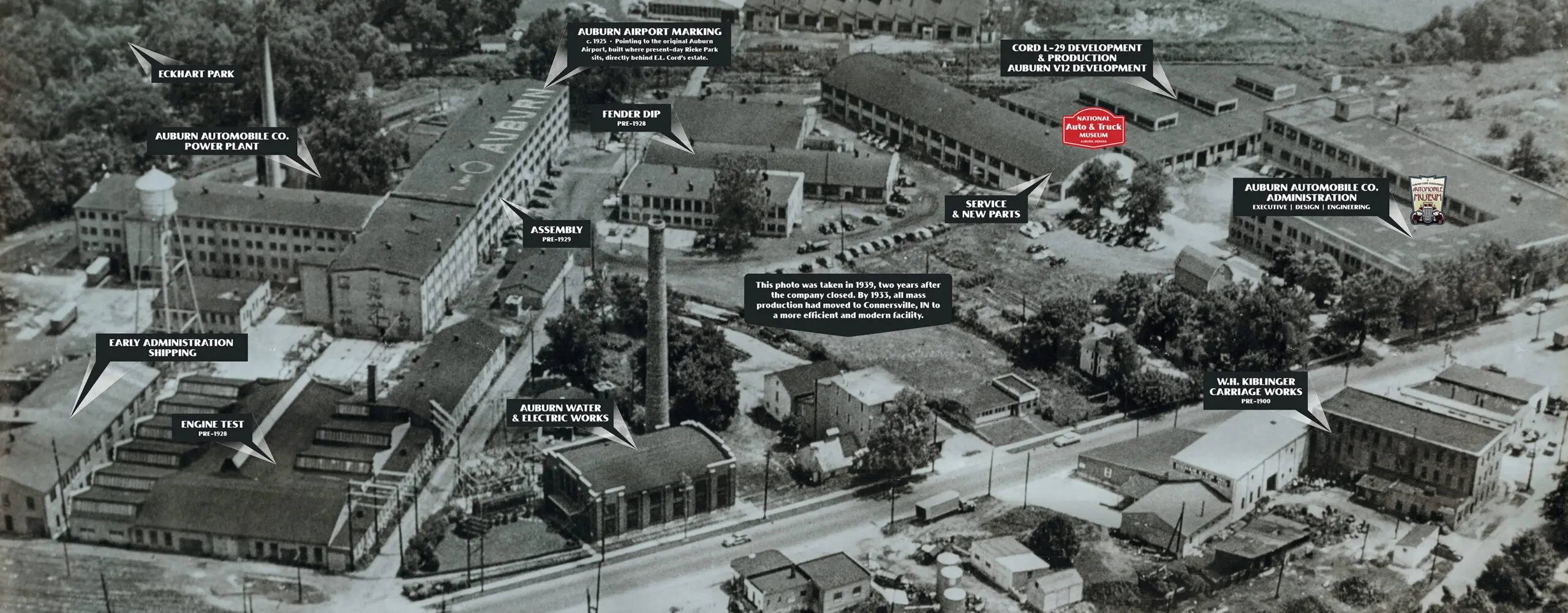
Below is an aerial view of the entire Auburn factory site around the 1930s. Look for our red NATMUS logo to see where we currently reside on this historic site.
Click on the image to zoom in!
Auburn Automobile Company Service & Parts Department
This building was built in 1923 and was used for test-driving automobiles, factory service and distribution of parts to distributors and dealers all over the world. If a person lived near Auburn and wanted his automobile serviced at the factory, this would be done in the Service Building. When the 810-812 cords were test driven and guaranteed to do over 100 M.P.H., they were tuned, prepared and tested from the Service Building. Each car was provided with a plaque signed by race driver, Ab Jenkins, indicating how fast the car had been driven at the factory.
Architecturally, the Service & Parts Department Building is built with a lattice arch roof system that provides a 70 foot clear span using 2” x 6” lumber. The lattice work holds deep significance in architecture across cultures and throughout history, and we a proud to retain a piece of this beauty.
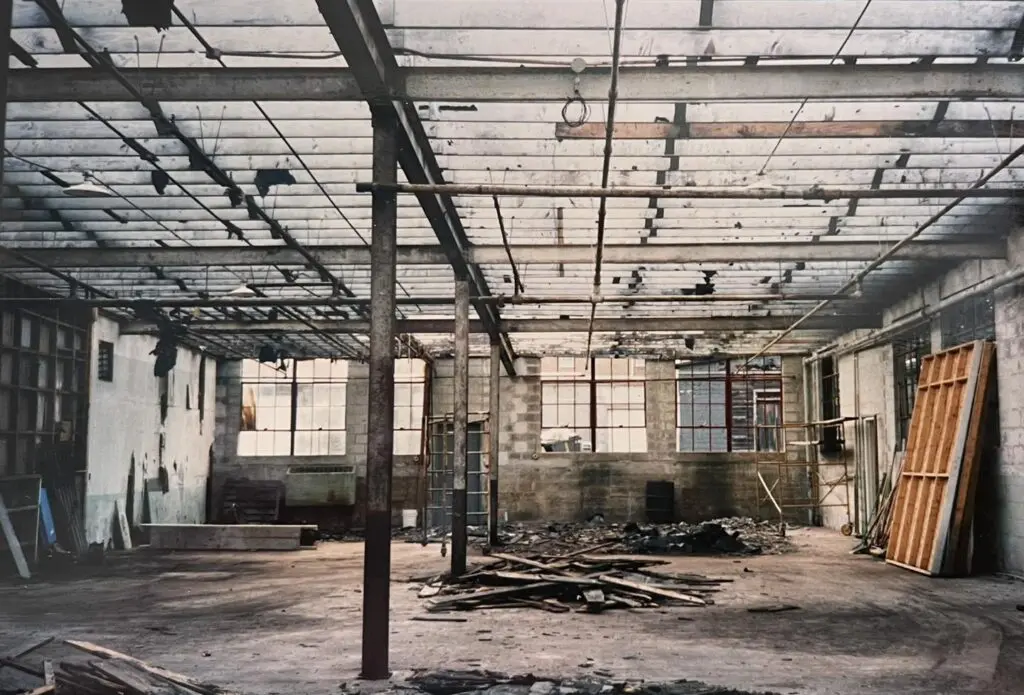
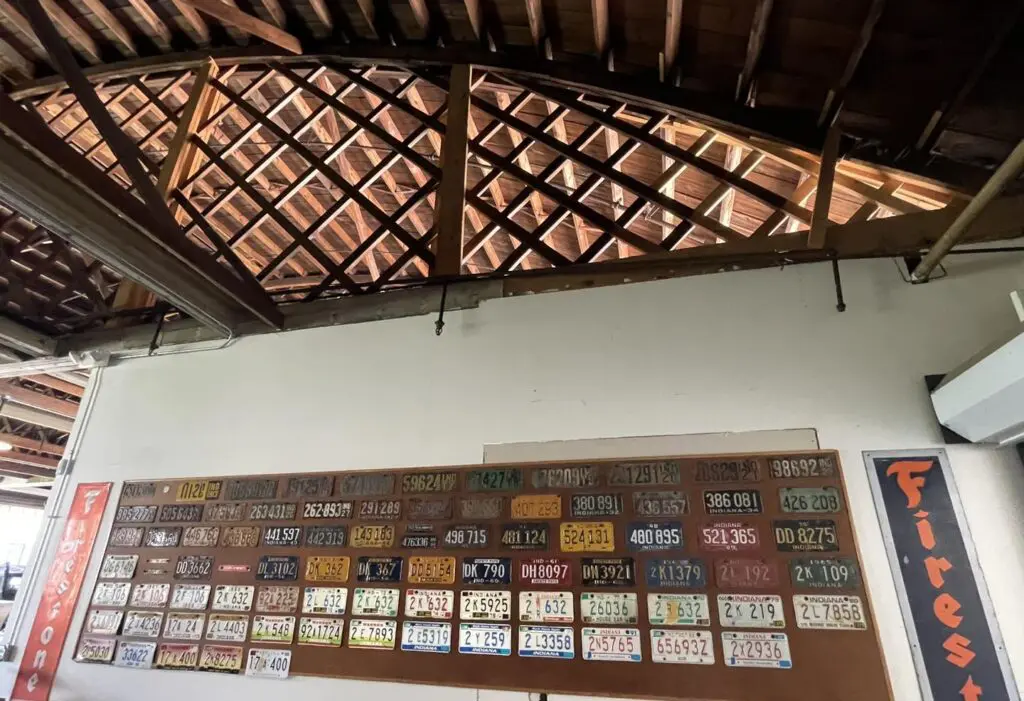
The Main Floor: Cord L-29 Building
This building that NATMUS calls home was built in 1928-29 and was the first new building that E.L. Cord constructed after he assumed management of the Auburn Automobile Company.
Intended for the assembly of the Cord L-29, the upper level of this building (our main showroom floor) was actually used to prepare the L-29s for shipment after they were assembled on the Auburn line. The Cord L-29 was the first production front wheel drive automobile in America.
Our main floor showcases unique cars spanning many eras, our GM Futurliner #10, as well as petroliana and neon galore!
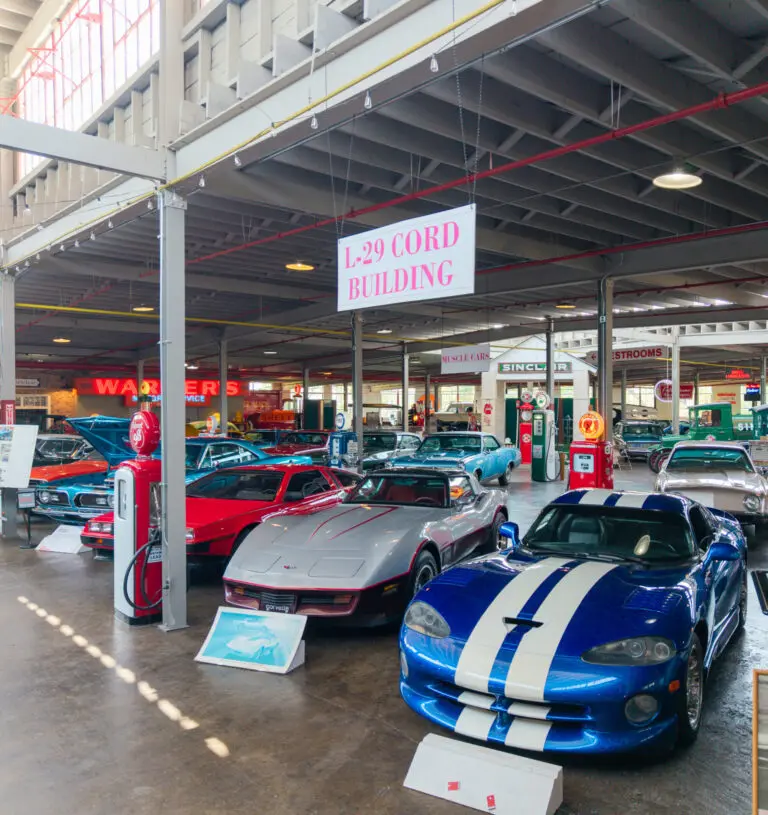
Architecturally, the Cord L-29 Building features monitor windows, which provide maximum natural light. When the windows are open by pulling the chains, an early type of “air conditioner” results in that air is pulled from side windows up through the Monitor windows – to provide fresh air and a slight breeze.
The Lower Level: Cord 812 R&D and Experimental Department
Back in the day, the lower level of NATMUS was used for experimental cars and the construction of prototypes. The first one hundred 810 Cords were hand built on the lower level. The 810-812 Cord was a revolutionary design that changed automotive history. It was the first car with unibody construction, concealed gas cap, disappearing headlights, and many other innovations.
Fred Duesenberg, Gordon Buehrig, Alan Leamy, Herb Snow and other prominent designers, engineers, and builders used the lower level for their creations.

In our lower level, you can see the original, restored equipment at work and on display to give you a glimpse into how the equipment, powered by electric motors, would turn long line shafts that were connected by belts into each individual machine.
An Added Bonus…The Eckhart Building
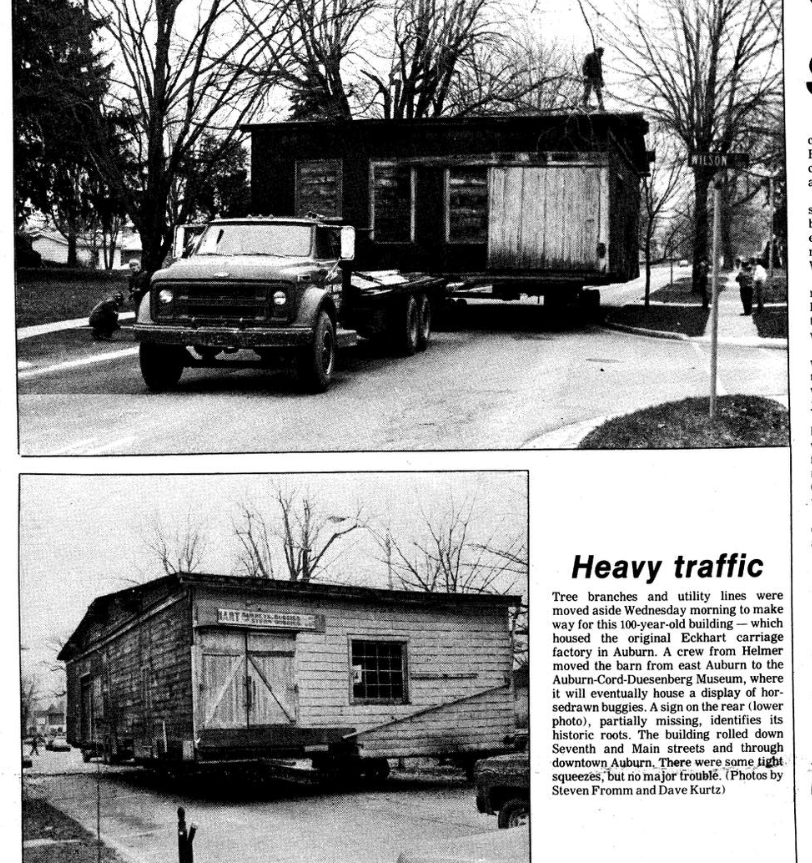
The Eckhart Carriage Company was the direct ancestor of the Auburn Automobile Company as both were owned by the Eckhart family in the early day. This is the last remaining building of the carriage factory. When you’re visiting, peer inside the windows of this building to see some buggies living out their days in this historic building.